New surveys of small business owners and restaurant operators show AI is now common on Main Street but rarely woven into how the business runs. Owners trust it to write their marketing long before they trust it with a customer’s question.

Key Takeaways
Ask a small business owner whether they use AI and two out of three will now say yes. Ask whether it has changed how the business actually runs and the answer shrinks to a sliver. Two surveys released this month put numbers on that gap, and they point to the same place: AI has arrived in small businesses as a writing assistant, not as part of the operating system.
Gusto’s 2026 State of Small Business report, covered by CPA Practice Advisor on November 12, surveyed 1,731 owners of U.S. businesses with 24 or fewer employees. Sixty-seven percent use AI tools. But the breakdown matters more than the headline. Nineteen percent are still experimenting, 28% use AI for at least some tasks, 15% use it regularly across multiple functions, and just 5% say it is built into every part of the business where the technology allows.
Depth varies by sector. Twenty-seven percent of professional services firms use AI across multiple functions or the whole business, against 16% of personal services firms and 13% of community services firms. Governance lags use across the board: only 25% of businesses with employees have an AI policy, although that is up from 15% last year.
The backdrop explains why owners are cautious about bigger commitments. Sixty-one percent are optimistic about their own business, but only 18% are optimistic about the U.S. economy, down from 29% in 2025. Fifty-nine percent say changing input prices hurt them over the past year, 52% raised prices in the last 12 months, and half plan to raise them again. “Higher costs and expensive borrowing make it hard to plan ahead,” said Nich Tremper, senior economist and head of Gusto Insights. When planning is hard, a cheap subscription that drafts emails is an easy yes, and a project to rewire how orders, scheduling or customer service work is easy to postpone.
The most revealing finding is where owners draw the line. According to Gusto, owners are most comfortable letting AI handle communication tasks with limited human review, and less comfortable with data analysis or answering customers’ questions directly. About 60% of AI users are comfortable with AI drafting marketing content with limited oversight, compared with 27% of non-users. In other words, the more owners use AI, the more they trust it to speak for the brand in public.
That ordering is the reverse of where the risk sits. Marketing copy published with little review carries the business’s name to every prospect who reads it, and generic, off-tone content is easy to produce at volume. A customer question, by contrast, is the moment where a small business usually wins on knowledge and attention. Owners are right to be careful there, but the caution often means AI never reaches the work where it could save the most time, such as pulling an order history or a policy answer while the customer waits, because the underlying records are not connected in the first place.
Other research suggests customers are already shifting regardless. In a U.S. Chamber of Commerce Foundation survey conducted by Ipsos with 750 small business owners from May 19 to June 4, 73% of employers using AI said it had affected customer expectations and behavior. The same share said it had changed employees’ roles. And the results among adopters were mostly good: 54% reported a mostly positive effect on how quickly tasks get done and 47% on work quality, with only 3% to 4% reporting a mostly negative effect on either measure.
Restaurants, among the most operationally intense small businesses, are further behind. The National Restaurant Association’s Digital Innovation report, reported by Nation’s Restaurant News on November 10, surveyed 212 operators between June 18 and July 18. Forty-two percent describe their approach to AI as cautious, 26% are excited and 18% are skeptical. Nearly 39% use AI tools in some form, but 31% have no plans to implement it yet, 20% are running small pilots, and only 3% are implementing AI projects companywide.
The uses mirror Gusto’s findings. Among operators using AI, 58% apply it to personalized marketing and outreach and 48% to analyzing customer feedback. Fewer use it for the operational core: 37% for recruiting, scheduling and labor management, 34% for forecasting demand and sales, and about two in ten for taking orders and processing payments. The top concerns are complexity (46%), cost (43%), customer acceptance (42%) and data security and privacy (35%). Operators said more training (56.5%), financial help (45%) and more case studies (42%) would make adoption easier. “The results suggest that many operators are still evaluating the business case for AI before committing to broader adoption,” the report said.
Small businesses do not have an AI adoption problem. They have an AI depth problem. The tools are already in two-thirds of them, mostly writing words. The owners who pull ahead next year will be the ones who move AI from the marketing folder into the parts of the business that customers actually feel, with the records connected and the rules written down.

Guide
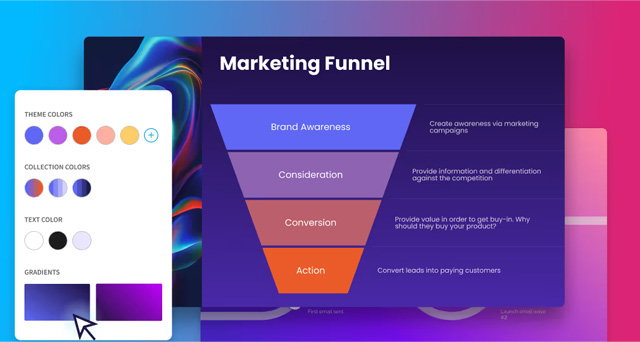
Six in ten small business AI users are comfortable letting AI draft marketing with little oversight. This guide explains why enforcing brand standards at the template level is what keeps faster content from turning generic.
Download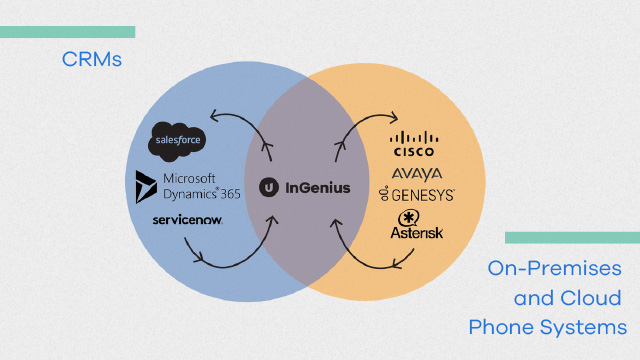

Guide
Owners hesitate to let AI answer customers directly, often because it cannot see the records behind the answer. This guide shows how connecting CRM and customer service systems builds the data foundation AI needs to pay off in live interactions.
Download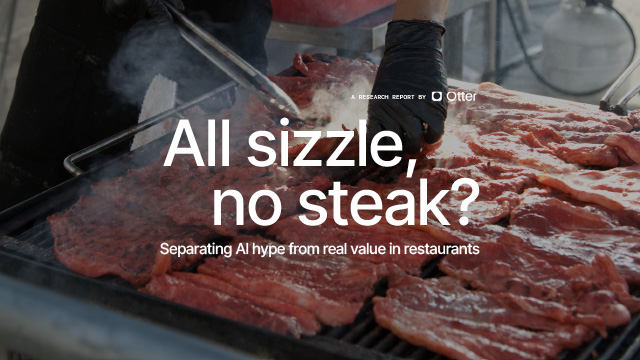

Guide
Restaurant operators asked for case studies and training before committing to AI, and only 3% run it companywide. This guide maps where AI is already creating leverage in order accuracy, menu optimization, demand forecasting and labor planning.
Download
Cognizant finds 80% of employees want more AI than their jobs permit and up to 82% say their tools fall short. Two-thirds of office professionals already use AI their employer does not allow.

Gartner expects AI spending to jump 49.5% this year, largely through software companies already own. Workday’s research shows the cost when those tools stay disconnected: a workday a week spent gluing systems together.
