U.S. output grew 3.7% in the third quarter while hours worked barely moved, the strongest productivity print in two years. Inside companies, the picture is murkier: Gartner finds only 13% of CIOs report significant value from AI, and just 4% of service leaders have hit their expected return.

Key Takeaways
The national numbers finally look like the productivity boom executives have been promising their boards. The U.S. economy produced noticeably more in the third quarter with almost exactly the same number of hours worked, and labor costs per unit of output fell. The harder question sits inside individual companies. Asked whether AI is delivering measurable value in their own organizations, most technology and service leaders still say no, and the gap between the macro data and the business case is where operations leaders now have to work.
According to the Bureau of Labor Statistics’ preliminary Productivity and Costs release on November 5, nonfarm business sector labor productivity increased at a 3.6% annualized rate in the third quarter. Output rose 3.7% while hours worked rose just 0.1%. As Allwork.Space reported, economists polled by Reuters had forecast 2.8%, and second-quarter productivity was revised up to a 2.1% pace from the 1.4% first reported.
Costs moved the right way too. Unit labor costs fell at a 0.7% annualized rate, the first decline since the second quarter of 2025, against economists’ forecast of a 0.6% rise. Hourly compensation grew 2.9%, so the cost decline came from more output per hour rather than from lower pay. On a year-over-year basis, productivity was up 2.1% and unit labor costs were up 2.4%.
The gains were not evenly spread. Manufacturing productivity rose only 0.3% in the quarter, with durable manufacturing up 2.2% and nondurable manufacturing down 1.7%. The figures are preliminary and quarterly productivity is volatile, as the large revision to the second quarter shows. One strong quarter is a signal worth taking seriously, not proof of a new trend.
The labor market data released the same day points in the same direction. Challenger, Gray & Christmas counted 43,994 announced job cuts in October, down 71% from a year earlier and the lowest October total since 2023. AI was cited for 1,265 of those cuts, the lowest monthly total this year, and market and economic conditions have overtaken AI as the leading reason for 2026 cuts. “This is a low-fire environment,” said Andy Challenger, the firm’s workplace expert and chief revenue officer.
Put together, flat hours and low layoffs describe companies extracting more output from roughly the same workforce. That is the outcome AI programs were sold to deliver. It is also the outcome of tighter process discipline, better tools and a long list of other factors, and the national statistics cannot separate one cause from another. For a COO, that distinction matters more than the headline, because only one of those explanations tells you where to invest next.
Inside companies, AI value remains hard to pin down. Gartner’s survey of 2,002 CIOs and technology executives, fielded from May to July, found only 13% say their enterprise has realized significant or transformational value from AI. Gartner puts the likelihood of any single AI use case succeeding at about one in five, and 58% of CIOs report increased pressure to deliver AI cost improvements. “Volume is not value,” said Alicia Mullery, VP Analyst at Gartner.
Customer service, often the first function to deploy AI at scale, shows the same pattern. A separate Gartner survey of 275 service and support leaders, released on November 4, found just 4% have achieved the ROI they expected from AI initiatives. The organizations getting further are spending differently: AI-forward service teams invest nearly 1.8 times more in data and knowledge management foundations than in the AI use cases themselves. “While customer service leaders are eager to accelerate their use of AI, many are failing to unlock its value,” said Christopher Sladdin, Senior Director Analyst at Gartner.
None of this contradicts the national data. Aggregate productivity can rise while most individual AI programs miss their targets, because the gains may be concentrated in a minority of firms and functions, or coming from sources other than AI. What it does mean is that a strong national number is not evidence that any particular company is contributing to it. The organizations that can show where their own output per hour went up, and why, will be the ones able to repeat it.
The third-quarter data gives operations leaders something they have lacked for most of the AI cycle: evidence at the level of the whole economy that output can rise without more hours. Whether their own organizations are contributing is a separate question that the national figures cannot answer. The companies that can trace their gains to specific processes, tools and decisions will be in a far better position to defend their budgets, and to repeat the result next quarter.


Report
With output up 3.7% on almost no extra hours, the next gains have to come from how work moves between people and systems. This research quantifies what tool sprawl and siloed workflows cost in productivity and decision speed, and how to consolidate them.
Download

Report
National productivity jumped 3.6%, yet only 13% of CIOs report significant value from AI in their own enterprise. Gartner examines why executive expectations and actual AI results have diverged, and what operations leaders can do to close the gap.
Download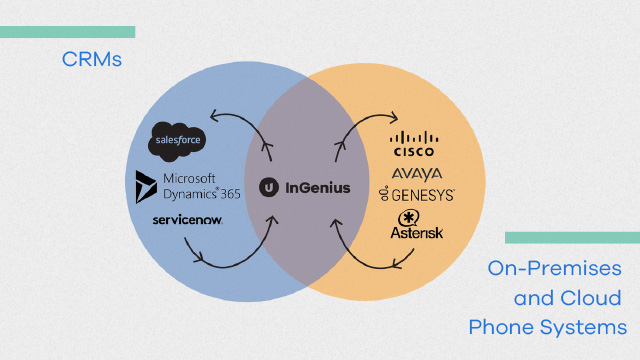

Guide
Only 4% of service leaders have hit their expected AI return, and the ones getting further invest heavily in data foundations first. This guide shows how connecting CRM and contact center gives service AI the data and agent workflow it needs to deliver ROI.
Download
Miro finds 73% say AI sped up their output, but 52% say it has not improved decision-making.

Accenture finds 82% of employees say AI made them more productive, yet half say it also raised the speed expected of them.
