A Gartner survey of more than 2,000 CIOs finds most organizations expect to put AI agents to work within a year, while barely one in five has the controls to oversee them. Gartner says AI risk is now growing faster than AI value.

Key Takeaways
For two years the enterprise AI conversation has been about speed: faster pilots, faster adoption, faster time to value. The next wave of tools raises the stakes on that instinct. AI agents do not just draft an answer for a person to check. They take actions, call other systems and make decisions inside workflows. And according to new Gartner research, most organizations plan to switch them on well before they have built the means to keep them in check.
The headline number comes from a Q2 2026 Gartner survey of more than 2,000 CIOs and technology executives: 71 percent of organizations expect to deploy agentic AI within the next 12 months, yet only 21 percent currently have agentic AI governance capabilities in place. Gartner presented the findings at its IT Symposium/Xpo in Barcelona, and its November 9 release framed the problem plainly: CIOs and IT leaders report that AI risk is growing faster than AI value in their organizations.
That gap of 50 percentage points is the figure CDO Magazine highlighted for data leaders, and it lands on top of uneven results from the AI already in production. A separate Gartner survey of more than 1,000 functional leaders found that 58 percent are seeing some positive value from their AI initiatives. "While many organizations are seeing pockets of AI success, they are struggling to consistently replicate and scale that value across the enterprise," said Daryl Plummer, Distinguished VP Analyst, Gartner Fellow and Chief of Research.
Plummer's prescription is not to slow down for its own sake. "The best thing a CIO can do is to align value with risk and align safety with governance," he said. "Alignment is the key."
The keynote detail reported by CIO Africa shows why governance has moved from a compliance topic to an operating cost. Gartner told the audience that 86 percent of CIOs believe AI risk is growing faster than AI value, and only 25 percent have aligned technology risk with business risk. Vendors claim productivity gains of 50 percent or more, while Gartner's own data shows about 16 percent. One in five AI projects succeeds, unchanged from last year, and successful projects now cost 18 times more than they did two years ago.
The cost of unmanaged output is already visible without agents in the picture. Gartner said 40 percent of workers received AI-generated work slop in a single month, each spending about two hours correcting it, a burden it puts at roughly $52 million a year for an average S&P 500 company. Agents that act on their own multiply that exposure: an error that once sat in a draft can now move straight into a customer record, a purchase order or a published message. "You can't see the harm until after it happens," said Kristin Moyer, Distinguished VP Analyst and Gartner Fellow.
Plummer's analogy was that brakes exist so cars can go fast safely. In Gartner's language, the right kind of friction is "good drag": controls that slow the wrong outcomes without stalling the right ones.
Earlier Gartner research points to where that friction should be built. A survey of 353 data, analytics and AI leaders, conducted from November to December 2025, found that organizations with successful AI initiatives invest up to four times more, as a share of revenue, in foundational capabilities than those with poor outcomes, according to BERI's analysis. Those foundations are data quality, data governance, AI-ready talent and change management. In a related Gartner survey, only 23 percent of IT leaders said they were very confident in their ability to manage security and governance for generative AI deployments.
Cost control is lagging too. The same research found AI adoption roughly doubled from about 40 percent of organizations in 2024 to about 80 percent in 2025, yet only 44 percent have financial guardrails or AI FinOps practices in place, People Matters reported. Agents, which consume compute every time they reason and act, make that missing discipline more expensive by the month.
Gartner's proposed answer is organizational rather than technical. Moyer described a "Flywheel Governor" as a virtual organization that owns the plan to keep AI safe: a centralized decision authority that guides accountability, technology and economics across functions that each see a different version of the same AI initiative.
A practical playbook for operations leaders:
The agentic era will reward the organizations that can move fast, but Gartner's data suggests speed alone is no longer the constraint. With only 21 percent ready to govern what 71 percent plan to deploy, the real advantage over the next year may belong to the companies that build the brakes before they press the accelerator.

Guide
Governing agents starts with governing the data they act on. Gartner sets out the data quality, governance and infrastructure decisions that its own research links to the four-times investment gap between AI winners and laggards.
Download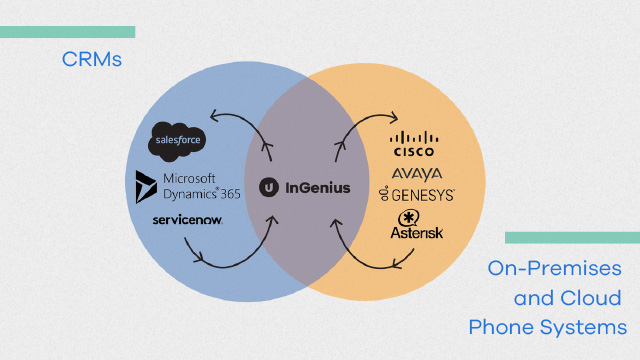

Guide
Agents in customer service are only as reliable as the records they read. Upland shows how connecting CRM and contact center systems gives AI a single, consistent data foundation and a defined agent workflow to operate within.
Download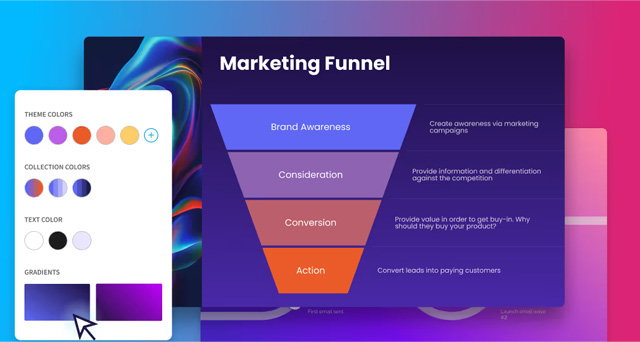

Guide
Work slop is what AI output looks like without standards. Beautiful.ai argues that enforcing consistency at the template level is the guardrail that keeps high-volume AI content from eroding quality and differentiation.
Download
A Gartner survey of 408 marketing leaders finds just 42% of CMOs monitor and correct misinformation about their brands in AI-generated output.

Dun & Bradstreet's survey of 10,000 businesses finds only 28% report broad or strong AI returns. Among companies with fully AI-ready data, 81% do.
