Dun & Bradstreet's survey of 10,000 businesses finds only 28 percent report broad or strong AI returns, unchanged from last quarter. Among companies whose data is fully ready for AI, 81 percent do.

Key Takeaways
Companies keep writing bigger checks for AI, and the share of them getting a clear return is not moving. That is the headline from the latest quarterly read on enterprise AI, and it lands in the middle of budget season. But underneath the flat average sits a sharp split. The organizations whose data is actually ready for AI are getting returns at several times the rate of everyone else, which suggests the next dollar of AI budget may do more good in the data layer than in the model layer.
Dun & Bradstreet's AI Momentum Survey, released on October 28 and covering 10,000 businesses across 32 countries, found that 98 percent of businesses report active AI initiatives and 65 percent plan to increase AI spending over the next 12 months. The share scaling AI pilots into production rose to 37 percent from 34 percent in the third quarter. Yet just 28 percent report broad or strong returns from AI, unchanged from the previous quarter, according to the Dun & Bradstreet release. Another 44 percent describe their results as pockets of ROI from some pilots, and only 9 percent say most of their pilots have scaled with clear gains.
The Americas stand out for the wrong reasons. Roughly 68 percent of businesses there plan to increase AI spending, among the highest of any region, yet only 23 percent report broad or strong returns and 37 percent describe their data as mostly or fully ready. Eastern Europe, Asia Pacific and Western Europe each report returns of 30 percent or higher.
Chief executives are not slowing down. In KPMG's 2026 CEO Outlook, released October 15 and drawing on more than 1,300 chief executives including 400 in the U.S., 84 percent of U.S. CEOs call AI a top investment priority over the next three years, and 65 percent say they will spend at least 10 percent of their capital budget on AI in the next year. Only 9 percent report that AI agents are transformational for their organization so far.
The most useful finding in the Dun & Bradstreet data is not the average. It is what happens when results are sorted by data readiness. Among businesses that say their enterprise data is fully ready for AI, 81 percent report broad or strong ROI. Among those whose data is only partially ready, the figure falls to 12 percent, a gap of more than six times. Fully ready businesses are also far more likely to report strong ROI specifically: 55 percent, compared with 2 percent of businesses with low or no data readiness. Meanwhile 57 percent of partially ready businesses are stuck at pockets of ROI, against 16 percent of fully ready ones.
The problem is how few companies sit on the right side of that line. Only 8 percent say their data is fully ready for AI at scale, up from 6 percent last quarter, while the share describing their data as mostly ready slipped to 33 percent from 36 percent. "What makes the difference between a pilot and real P&L impact is whether the AI is working from verified business context," said Gary Kotovets, Chief Data and Analytics Officer at Dun & Bradstreet.
Two other surveys published this month point the same way. Komprise's survey of 500 technical decision makers, fielded in September and released October 15, found that 68 percent describe their organizations as maturing or mature with AI, yet on average only 28 percent have quantified ROI. Just 7 percent have 70 percent or more of their unstructured data cleaned, prepared and classified for AI, and nearly half cite finding the right data for a project and cleaning up redundant, obsolete and trivial files as a challenge. Customer service was the area where the most respondents had quantified ROI, at 38 percent, while operational savings came in at 21 percent.
The gap between how ready leaders feel and how ready their data is shows up most clearly in research from Further. Its survey of 515 U.S. AI decision-makers, reported by Pure AI, found that 77 percent report a positive return on AI investment, but only 5 percent believe their organization's data is largely ready for AI. Only 29 percent have completed a formal data audit and remediation plan, and just 3 percent have a documented AI-audit process.
The cost of skipping that work is already visible. 37 percent said their organization had paused, scaled back or abandoned an underperforming AI initiative in the previous 12 months, and among those, 24 percent cited data quality or availability as the main reason. "In reality, confidence without a documented process is exposure," said Kierra Dotson, associate director of AI strategy and governance at Further. KPMG found CEOs moving in the same direction, with 69 percent of U.S. chief executives saying they are increasing their focus on internal data governance and control.
For operations leaders, the implication is practical. Data readiness is rarely a single project owned by IT. It is the sum of every disconnected system, duplicated record and undocumented workflow that feeds an AI tool, and much of that sits inside operational processes rather than in the data warehouse.
A practical playbook for operations leaders:
The AI spending curve is still climbing, and the return curve has gone flat for most companies. The data says the difference is not access to better models. It is whether the business has done the unglamorous work of making its own information trustworthy, and only a small minority has done it so far.

Guide
If data readiness decides which pilots pay off, it belongs in the prioritization itself. Gartner's framework ranks AI use cases by feasibility and business impact, giving teams a way to back the ones their data can actually support.
Download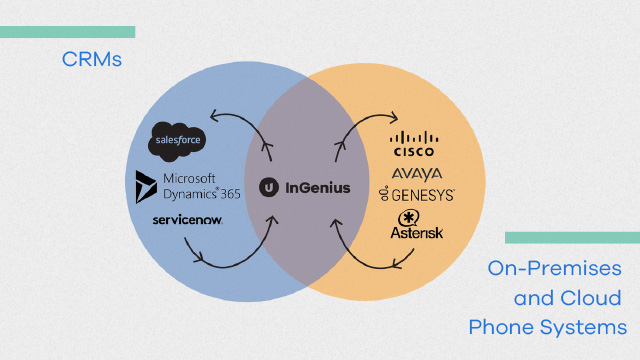

Guide
Customer service leads the areas where companies can quantify AI returns, but only when the data is connected. Upland explains how linking CRM and contact center systems builds the data foundation service AI needs to deliver ROI.
Download

Report
Much of the data AI depends on is scattered across siloed tools and workflows. ClickUp's research quantifies what tool sprawl costs in productivity and decision speed, and lays out a framework for consolidating work into one system.
Download
Gartner finds only 13 percent of CIOs have seen significant AI value, and the few with rules for retiring low-value AI are 2.6 times more likely to lead.

New surveys of 1,300 contact center leaders and professionals show AI adoption racing ahead of the data and integration it depends on.
