A Gartner survey of 408 marketing leaders finds most CMOs are not monitoring what AI assistants say about their brands, even as agent traffic to product pages climbs month over month.

Key Takeaways
For most of the last two decades, a company controlled the first description a buyer read about it. The website, the sales deck and the product page were written, approved and published by people who answered for them. That is no longer how a growing share of buyers meet a brand. They ask an AI assistant, or send an agent to compare options on their behalf, and the summary that comes back is assembled by a system the company does not own. New research suggests most organizations have not yet assigned anyone to check what those systems are saying.
A Gartner survey of 408 senior marketing leaders, conducted from July through August 2026 and released on November 9, found that 42% of CMOs have taken steps to monitor and correct misinformation about their brands in AI-generated output. Put the other way, a majority of marketing leaders have no routine for finding out when an AI summary gets their pricing, products or policies wrong. More have moved on visibility than on accuracy: 61% have adapted content strategies to improve machine readability and visibility in AI-driven experiences. At the same time, 94% plan to increase investment in human touchpoints over the next year.
"As consumers and B2B buyers increasingly rely on AI-powered tools to discover and evaluate brands, inaccurate information can directly influence perceptions and purchasing decisions," said Sharon Cantor Ceurvorst, VP Analyst in the Gartner Marketing practice. Her prescription is operational rather than creative: build "machine-readable brands," so that trusted, distinctive brand elements are what AI summaries actually surface.
The risk is not abstract. Earlier this month this site reported that 44% of consumers say an AI tool has contradicted a company representative or its policies. When the assistant and the brand disagree, the brand does not automatically win.
The volume of machine readers is growing fast. Data from HUMAN Security, reported by MediaPost on November 10, shows agentic traffic in October grew 157% from September and 697.5% compared with August. Eighty-five percent of agent requests go straight to product and search pages, the places where specifications, prices and availability live. Meta and OpenAI agents together accounted for about 89% of agentic requests across the internet in October.
That concentration matters for operations as much as for marketing. If a product page carries an outdated spec, an expired promotion or an ambiguous returns policy, a human visitor might notice the inconsistency. An agent is more likely to repeat it with confidence. The content that used to be maintained for search rankings is now, in effect, the briefing document for a buyer's AI assistant.
Gartner had flagged the broader trend in June. In a Q&A from its Marketing Symposium, Distinguished VP Analyst Andrew Frank warned that AI is making false and misleading content cheaper to produce, easier to personalize and faster to spread. Gartner predicts that by 2027, 50% of enterprises will be investing in disinformation security products or services and TrustOps strategies, up from less than 5%. Frank's framing is blunt: disinformation "is a brand issue," not only a security or legal one.
Not every inaccuracy comes from outside. Companies are also flooding the web with their own AI-generated material, and much of it is drifting off-brand before it ships. An Optimizely study of 2,003 marketing leaders across seven countries, conducted by Savanta and reported by IT Brief, found that 25% knowingly publish off-brand AI content when deadlines are tight. Only 30% say their brand voice is genuinely unmistakable, and 51% are at least somewhat worried AI is contributing to a "sea of sameness" across brands.
The workload is real, too. In the same study, 76% of marketing leaders spend at least three hours a week editing, fact-checking or correcting AI output, and 40% lose time moving information between disconnected systems. Two-thirds, 66%, said they would pause or adjust their company's AI rollout if given the chance to strengthen guardrails, governance or the operating model. Inconsistent source content is exactly what AI summaries then absorb and repeat.
Gartner's 94% figure on human touchpoints points to the other half of the answer. "As customers delegate more of their purchase journey to AI assistants and agents, the remaining human touchpoints become more consequential," Cantor Ceurvorst said. When a buyer finally calls, books a demo or reaches a salesperson, that conversation has to be accurate, consistent and worth the effort.
A practical playbook for operations and marketing leaders:
The first description many buyers now read about a company is written by software that answers to someone else. The 42% of CMOs already checking those descriptions have started treating brand accuracy as an operating discipline. The rest are relying on the AI to get it right on its own.

Guide
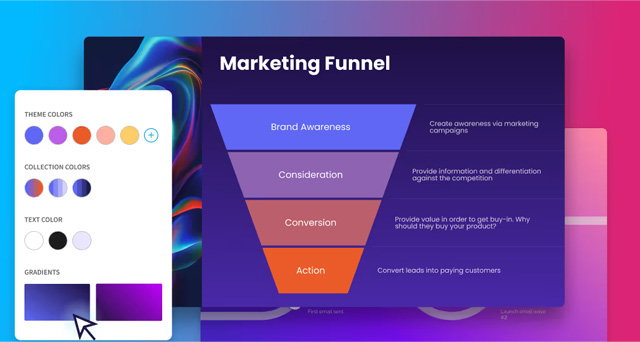
When a quarter of marketing leaders knowingly ship off-brand AI content, inconsistency becomes the raw material AI summaries repeat. Beautiful.ai's guide argues for enforcing brand standards in the templates every team starts from.
Download

Guide
If 94% of CMOs are investing more in human touchpoints, the phone call is where that bet is tested. Upland's guide covers giving agents the context to resolve complex calls on the first contact.
Download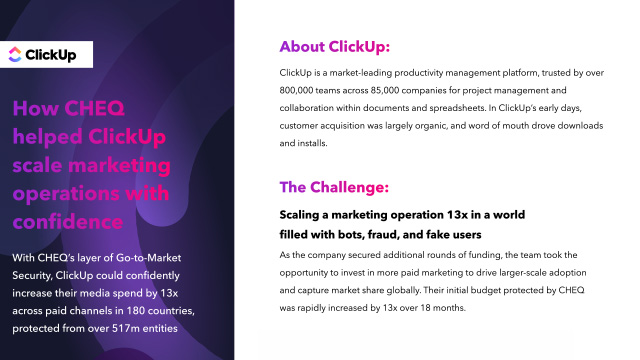

Case Study
As automated traffic climbs, telling machine visits from real buying intent becomes a measurement job. This case study shows how ClickUp's marketing operations team filtered invalid traffic so it could trust its campaign data again.
Download
Dun & Bradstreet's survey of 10,000 businesses finds only 28% report broad or strong AI returns. Among companies with fully AI-ready data, 81% do.

Cloudflare says non-human traffic has already overtaken human visits. For operations teams, the bigger risk is decisions built on polluted data.
