Gartner finds only 13 percent of CIOs have seen significant AI value, and just 17 percent have rules for retiring low-value AI in production. The companies that do are 2.6 times more likely to lead.

Key Takeaways
Most organizations have a well-worn process for starting an AI project: a business case, a pilot budget, a sponsor and a demo date. Far fewer have a process for ending one. New research released this week at Gartner's IT Symposium/Xpo suggests that missing exit is now one of the clearest dividing lines between companies getting value from AI and those still waiting for it. The leaders are not the ones running the most pilots. They are the ones willing to switch the weak ones off.
Gartner's 2027 CIO and Technology Executive Agenda survey, which polled 2,002 CIOs and technology executives between May and July 2026, found that only 13 percent say their enterprise has realized significant or transformational value from AI so far. The likelihood of any individual AI use case succeeding, the firm says, remains one in five. The findings were announced on October 19 in Gartner's survey release, and the analyst framing was blunt. "Volume is not value," said Alicia Mullery, VP Analyst at Gartner.
The pattern matches what chief executives are reporting from the other side of the table. In EY-Parthenon's CEO Outlook Survey of 1,200 CEOs across 21 countries, half named AI as the biggest driver of material productivity gains over the past year, yet only 16 percent said they have clear, real-time visibility into AI return on investment, according to CFO Dive. Another 23 percent said productivity improvements were being absorbed by operational complexity, regulatory requirements, risk management and additional work. "AI is creating real productivity gains, but productivity alone is not a strategy," said Andrea Guerzoni, EY-Parthenon global vice chair.
Put those numbers together and the operating problem comes into focus. When four in five use cases are unlikely to succeed and most leaders cannot see returns in real time, a portfolio without stopping rules keeps funding the failures alongside the winners.
The most striking part of the Gartner research is how rare that discipline is, and how much it seems to matter. Only 31 percent of CIOs say their organization has guidelines for when an AI pilot should not move to production. Just 17 percent have guidelines for abandoning low-value AI initiatives that are already in production. Yet organizations with pilot-stage guidelines are 2.3 times more likely to be vanguards, Gartner's term for CIOs who deliver stronger business outcomes while also reporting high CEO-perceived AI value. Those with rules for retiring production AI are 2.6 times more likely.
Mullery was clear that this is not a decision IT can make alone. "Establishing and adhering to these criteria is a team sport," she said, adding that "CIOs need business partners who are willing and ready to walk away from low value investments." That is the uncomfortable part. A pilot that has a business sponsor, a vendor relationship and a few months of sunk effort behind it rarely gets cancelled on merit unless the threshold for cancelling it was agreed before it started.
Gartner has been warning about this for more than a year. In June 2025 the firm predicted that over 40 percent of agentic AI projects will be canceled by the end of 2027 because of escalating costs, unclear business value or inadequate risk controls. "Most agentic AI projects right now are early stage experiments or proof of concepts," said Anushree Verma, Senior Director Analyst at Gartner, at the time. The new data adds a twist: cancellation is not only a sign of failure. Done deliberately and early, it is a habit of the organizations that are winning.
The pressure to prune is rising because AI does not cost what traditional software costs. Gartner found that 58 percent of CIOs report increased pressure to deliver AI cost improvement, while 51 percent expect AI to increase the total cost of ownership of technology solutions. "Unlike traditional technology costs, which are largely predictable, AI costs are probabilistic and determined at run time," Mullery said. A low-value use case left running is not a fixed line item that can be ignored. It can grow with every query, every user and every new integration.
The workforce side of the equation is just as underdeveloped. Organizations with explicit plans to redesign roles for a combined human and AI agent workforce are 2.4 times more likely to be vanguards, yet only 4 percent of CIOs report having such plans. Meanwhile, 40 percent expect IT headcount to increase in 2027, particularly in cybersecurity and data and analytics. The picture is of companies adding AI and adding people at the same time, without yet deciding how the work itself should change.
A practical playbook for operations leaders:
The first wave of enterprise AI was about getting started. The next one looks more like portfolio management, and the companies pulling ahead are treating the ability to stop as seriously as the ability to launch. Thirteen percent have found real value so far. The rules for walking away may be the cheapest way to join them.

Guide
Stop rules only work if you know what you are ranking against. Gartner's framework scores AI use cases by feasibility and business impact, giving teams a shared basis for deciding which pilots advance and which get cut before they reach production.
Download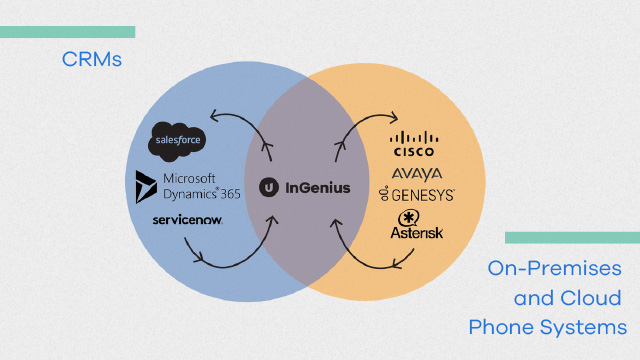

Guide
When only 13 percent of CIOs report significant AI value, the difference is often the plumbing. Upland shows how connecting CRM and contact center data gives service AI the foundation and agent workflow it needs to produce a measurable return.
Download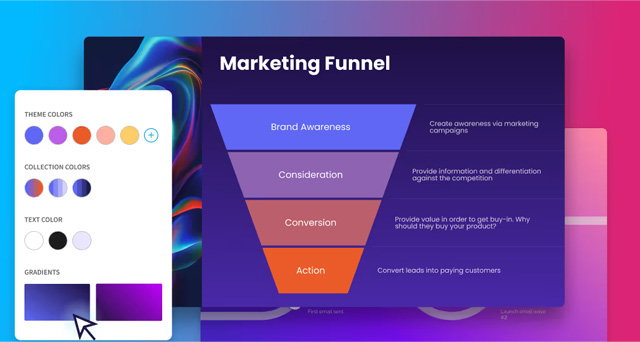

Guide
Gartner's warning that volume is not value applies to content as much as code. Beautiful.ai explains why AI-generated output without standards enforced at the template level erodes differentiation instead of adding to it.
Download
Cloudflare says non-human traffic has already overtaken human visits. For operations teams, the larger risk is decisions built on polluted data.

New surveys of 1,300 contact center leaders and professionals show AI adoption racing ahead of the data and integration it depends on.
