Surveys released this month show AI use is close to universal inside the enterprise while value measurement barely exists. The small group of organizations that track outcomes formally report returns on a completely different scale.

Key Takeaways
Inside most companies, the argument about whether to use AI is over. The tools are in the browser, the productivity suite, and the ticketing system, and employees are using them every day. The argument that has not started, in most boardrooms, is the one that finance leaders actually care about: what is all of this worth? A run of research released this month suggests that for a large majority of organizations, nobody can answer that question, because nobody is measuring it.
The clearest evidence comes from an unlikely corner. According to Gartner research on internal audit published September 15, 93% of audit leaders and auditors report some level of AI use. Only 15% say their department has formal use cases that run routinely in audits, and 54% of the 142 chief audit executives surveyed have not started measuring the value of that use at all. Just 7% tie AI to cost metrics such as reduced external spending or avoided hiring. This is the function whose job is to verify that the business measures things properly, and it is not yet measuring its own AI. James Bourke, Director Analyst in Gartner's Risk and Audit Practice, put it plainly: most audit functions are not realizing the full potential of these technologies.
The gap is not that AI fails to help. Workers are clear that it does. McKinsey's 2026 state of AI survey, as reported by MarketScale on September 13, found that 80% of respondents say AI has improved their individual productivity and 50% say it helps them make better decisions. Yet the share reporting that AI contributed anything to organizational EBIT stayed flat at 37%, unchanged from the prior year. Only 6% qualify as AI high performers, meaning organizations that attribute 5% or more of EBIT to AI.
Deloitte's State of AI in the Enterprise 2026, based on 3,235 leaders across 24 countries, tells the same story from a different angle. Two thirds (66%) of organizations report productivity and efficiency gains from AI. But only 20% are already growing revenue through their AI initiatives, against 74% who hope to in the future. And 37% are using AI at a surface level with little change to existing processes, which is precisely the kind of deployment where saved minutes dissolve into the working day instead of showing up in a financial statement.
That is the mechanism operations leaders need to understand. An individual who drafts a report in half the time has created capacity, not value. The value only appears when someone decides what that capacity is for, redesigns the workflow around it, and then checks whether the output changed. Without the last step, the organization cannot tell a productive deployment from an expensive habit.
The most striking data on this point comes from a study of 1,006 executives by the Return on AI Institute, summarized by ERP Today. Only 4% of organizations in pilot stages without measurement report getting a great deal of value from AI. Moving to production without assessing outcomes lifts that to 18%. Introducing post-implementation measurement raises it to 44%, and organizations that formally report AI value to leadership reach 85%. The same write-up notes that companies cut headcount 30 times more often based on anticipated AI gains than on realized value.
Correlation is not causation, and organizations that measure carefully may simply be better run to begin with. But the direction is consistent with Grant Thornton's 2026 AI Impact Survey of 950 business leaders. Organizations with fully integrated AI are nearly four times as likely to report AI-driven revenue growth (58% versus 15%). Yet 78% of respondents lack strong confidence that they could pass an independent AI governance audit within 90 days, and only 22% of operations leaders say they have a fully developed AI strategy. Tom Puthiyamadam, Managing Partner of Advisory Services at Grant Thornton Advisors, summarized the pattern: “AI deployment has outpaced defenses. Leaders with governance move faster, with confidence to scale.”
For finance and operations leaders, the implication is uncomfortable but useful. The next round of AI budget conversations will not be won by adoption numbers. As AI line items grow, CFOs will ask what the last round of spending returned, and the answer “our people like it” will not survive.
The organizations pulling ahead are not the ones with the most AI licenses. They are the ones that can show, in numbers a CFO accepts, what those licenses changed. For most companies, closing that gap costs far less than the next tool purchase.


Framework
Scoring use cases by feasibility and business impact before funding them is how you set the baseline this article argues most organizations skip, and it gives leadership a roadmap it can hold to measured results.
Download

Case Study
A worked example of the difference between saved time and measured value: Cartoon Network tracked turnaround and output after consolidating its workflows, so the gain showed up as a number, not a feeling.
Download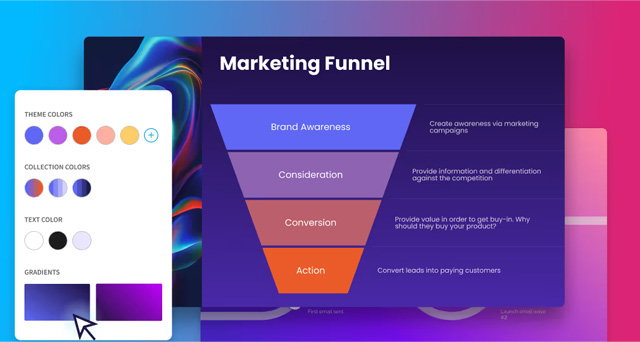

Guide
AI multiplies the volume of decks and documents a team produces, but volume is not value. This guide explains why standards enforced at the template level decide whether that extra output is usable or just rework.
Download
A study of 800 organisations across six sectors quantifies what poor operational performance actually costs most businesses.

The tension between finance and operations has never been higher, but a growing cohort of CFO-COO partnerships is reshaping how operational investment decisions get made.

Traditional annual planning cycles are breaking down. We examine the adaptive methodologies leading operations teams use to stay ahead of disruption.
