Three consumer surveys released in the past two weeks find AI has raised service expectations while making the experience worse for most people. The failure point is the moment a bot passes a customer to a person without the context.

Key Takeaways
Most companies have now put an AI layer in front of their customer service operation, and customers have noticed. What they have noticed is not mainly wrong answers or privacy worries. It is what happens when the bot gives up. Three consumer surveys published between September 29 and October 6 point to the same weak joint: the transfer from AI to a human agent, where the customer’s story too often fails to make the trip. For operations leaders, that is a workflow and systems problem, and it is one the AI vendor cannot fix on its own.
Alchemer surveyed 2,009 U.S. consumers for its 2026 AI and customer expectations research. As CX Dive reported on October 2, nearly 9 in 10 consumers say AI has negatively affected their experience with a company. The single biggest complaint was not accuracy. It was access: 44% say AI has made it harder to reach a human representative, and nearly a third say they have had to repeat information they already provided once they finally reached a live agent.
The detailed findings, summarized in MarTech Series’ coverage of the report, show where else the experience slips. 37% of consumers have received AI responses that misunderstood their question, 26% have received incorrect information, and 32% say AI has made the interaction feel impersonal. Yet 38% still want AI to help resolve their issues faster. Familiarity does not breed patience: 40% of daily AI users say AI has made service feel impersonal, compared with 22% of people who do not use AI, and daily users are 2.5 times more likely to pay extra for human support. Overall, 43% would pay more for a product or service that guarantees access to a person.
“Consumers want the benefits of AI for faster service, they don’t want to sacrifice connecting with humans,” said Ryan Tamminga, Chief Customer Officer at Alchemer.
A second study sharpens the picture. Zingtree’s research, released October 6 and conducted by CMSWire INSIGHTS in July and August, surveyed 1,040 U.S. adults who had dealt with at least one complex support issue in the past year. That turns out to be almost everyone: 90% had at least one complex issue, and half of those had one or more go unresolved. Half of respondents said they had to repeat information after being transferred from AI to a human agent, and 50% received generic, unhelpful responses during a recent complex interaction.
The trust data shows customers are not rejecting AI outright. Six in 10 trust it for simple requests but not complex ones, and 64% say they trust AI more when it offers a direct transfer to a human. In other words, a visible, working exit to a person is part of what makes the automated front door acceptable. “Complex support is the next proving ground for AI,” said Zingtree CEO Juan Jaysingh. “They are willing to give it a chance, but the window to get it right is small.”
Why does the context get lost? The CX Dive analysis points to fragmented back-end systems, with CRM, ordering, and billing platforms that do not share data. A bot can collect a customer’s account number, order details, and problem description, but if that record does not land on the agent’s screen at the moment of transfer, the human starts from zero and the customer starts again. Incentives can make it worse. Jeannie Walters, CEO of Experience Investigators, told the publication that a bot’s scorecard often rewards keeping customers away from live agents, which turns containment into the goal instead of resolution.
The pattern across the three studies is consistent. Customers will try the automated channel, and many want it to be faster. What they will not tolerate is being trapped in it, or being forced to retell their story to a person after the bot has already heard it. That makes the handoff an operations design problem: routing rules, agent desktop integration, data flow between systems, and the metrics that tell teams what success looks like. Watermark Consulting founder Jon Picoult offered a blunt remedy in the CX Dive piece, suggesting that executives who control the budget experience the service journey themselves. It is cheap advice, and it tends to surface the gaps faster than a dashboard.
The companies that win this phase of customer service AI will not be the ones with the most automated contacts. They will be the ones whose customers never have to tell their story twice. Right now, half of customers with complex issues say they do, and that is the number worth moving.

Guide
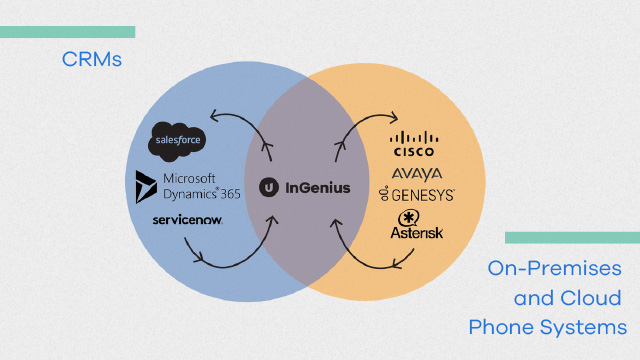
Half of customers repeat themselves after a bot transfers them because the CRM record never reaches the agent. This guide shows how connecting CRM and contact center data puts that context on the agent’s desktop at the moment of handoff.
Download

Guide
When 32% of consumers say AI makes a company feel impersonal, unbranded machine output is part of the problem. This guide explains how to hold AI-generated communications to the standards that keep a brand recognizable.
Download

Research
Lost context at the handoff starts with CRM, ordering, and billing systems that do not share data. This research quantifies what fragmented tools cost teams in missed handoffs and duplicated effort, and how to close the gaps.
Download
The average knowledge worker now navigates 11 different applications to complete a single task. New research links tool proliferation directly to burnout, error rates, and attrition.

A survey of 2,527 enterprise leaders finds 74% have shut down or rolled back a live AI customer agent, and the best-governed programs roll back most often. Nearly all are raising the budget anyway.

Independent benchmarking data puts hard numbers on automation ROI across 14 function areas, and reveals a wide gap between vendor claims and what finance teams can verify.
