A survey of 2,527 enterprise leaders finds most have already shut down or rolled back a live AI customer agent, and the best-governed programs roll back most often. Nearly all of them are raising the budget regardless.

Key Takeaways
AI agents are now answering customers at most large companies, and at most of those companies they have also been switched off at least once. That is the uncomfortable pairing at the center of new research on AI in customer communications, and it has moved from vendor white paper to mainstream coverage this month. The pattern matters for operations leaders because a rollback is not a technology event. It is a staffing, workflow, and customer experience event, and it lands on the teams who were told the AI would lighten their load.
Sinch surveyed 2,527 senior decision-makers across 10 countries and six industries in January and February, and the headline number is stark. According to Sinch's release of the findings, 74% of enterprises have already rolled back or shut down an AI customer communications agent after deployment. Adoption is not slowing because of it: 62% already have AI agents live in production, and 98% report increasing their investment in AI communications this year.
The data resurfaced in a Stacker report syndicated on September 22, which frames the question customers actually care about: can the AI tell when you have had enough? The report notes that 88% of companies expect AI agents to be handling some customer conversations by the end of 2026, and cites Gartner research finding that nearly 80% of customer service organizations plan to reshape the roles of some human agents as routine work is automated. The point is not that humans disappear. It is that the handoff between AI and people becomes the part of the operation that decides whether a customer leaves satisfied.
The failures are rarely exotic. In Sinch's detailed breakdown, exposure of personal information was the most common rollback trigger at 31%, followed by hallucination at 22% and auditability problems at 16%. Only 24% reported no failures at all. And real cases keep surfacing. NBC Chicago reported on September 16 that United Airlines acknowledged its chatbot gave a customer the wrong information for her situation. Northwestern University computer science professor V.S. Subrahmanian told the station that people expect AI to make mistakes, but that there should also be responsibility for those mistakes.
The most counterintuitive finding is where the rollbacks concentrate. Among organizations that describe their guardrails as fully mature, the rollback rate is 81%, higher than the overall figure. Sinch Chief Product Officer Daniel Morris put it directly: “If governance was the fix, mature teams would roll back less. They don’t.” The company’s own reading is that the most advanced organizations are not failing less; they are catching failures sooner.
That reframes what a rollback means. A team with strong monitoring that pulls an agent after a bad week is doing its job. A team with no monitoring may simply not know its agent is misbehaving. For operations leaders, the useful question is not “have we ever rolled back?” but “how fast did we notice, and what happened to the customers and staff while we did?”
The cost of that answer is visible in the survey. When AI agents fail, 35% of organizations cite increased human agent load as the most significant business impact, and 34% cite reputational damage and loss of customer trust. Meanwhile, 84% of AI communications engineering teams spend at least half their time building guardrails and safety controls, and 55% have had to build custom infrastructure just to preserve customer context across channels. Sinch SVP of Software Engineering Anton Efimenko warned that the cost of building custom guardrails compounds over time.
The optimism is not invented. Salesforce research published in May, based on 3,075 service professionals, found AI agent adoption in service organizations rose from 39% in 2025 to 66% in 2026, and 70% of adopters saw measurable value within 60 days. But the same study found 72% of service operations professionals cite data readiness as a major blocker, and only 44% of consumers trust AI to handle customer service, according to the Metrigy index it cites.
Put those numbers next to the rollback data and the operational risk becomes clear. A company that sized its service team around an AI agent now has to absorb that agent’s workload, on short notice, whenever the agent is pulled. The customers who arrive at a human after a failed AI exchange are also the hardest ones: already frustrated, often repeating themselves, and frequently arriving without the context the bot collected. The rollback is survivable. The unplanned surge and the lost context are what damage the customer relationship.
The companies getting value from AI customer agents are not the ones that never pull them back. They are the ones that built an operation that keeps working when they do. In a market where 98% are still raising the budget, that resilience is quickly becoming the real competitive advantage.

Guide
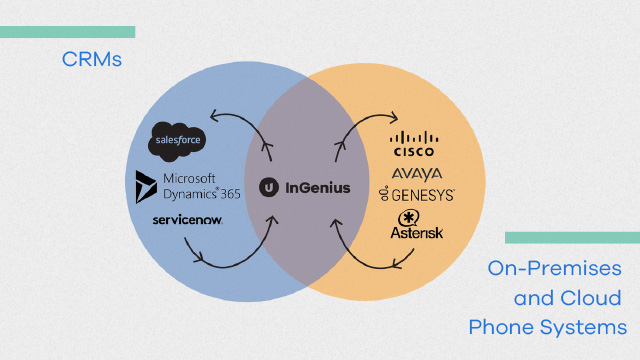
When an AI agent hands a customer to a person, the CRM and contact center data has to arrive with them. This guide covers the integrated agent desktop that keeps that context intact, so a rollback does not force customers to start over.
Download

Research
Budgets rising by 98% of enterprises while three in four pull agents back is the expectation gap in miniature. Gartner’s research explains how operations leaders can reset what AI is expected to deliver before the next rollout.
Download

Research
More than half of AI teams in the Sinch data had to build custom plumbing just to keep context across channels. This research quantifies what siloed systems cost in speed and decisions, and how to consolidate the work they fragment.
Download
The average knowledge worker now navigates 11 different applications to complete a single task. New research links tool proliferation directly to burnout, error rates, and attrition.

Microsoft, Google, Zoom, and a new generation of challengers are fighting for the unified communications budget, and IT and operations leaders are caught in the middle.

Independent benchmarking data puts hard numbers on automation ROI across 14 function areas, and reveals a wide gap between vendor claims and what finance teams can verify.
