A new Miro survey of more than 9,500 leaders and employees finds AI is accelerating individual output while leaving collaboration and decision-making largely where they were. Most of the AI work is happening alone, and the cost of checking it is landing on colleagues.

Key Takeaways
The productivity case for AI has mostly been made one person at a time. Ask an individual whether the tools help and the answer is usually yes. Ask whether the team now decides faster, coordinates better or makes fewer bad calls, and the answer is far less convincing. New research released this week puts numbers on that gap, and it points to a cause operations leaders can actually do something about: AI work is being done in private, and the team only sees the output once someone has to check it.
Miro’s State of Intelligent Collaboration 2026 report surveyed more than 9,500 leaders and employees across product development, IT, operations and other functions in North America, Europe and Asia-Pacific, fielded in September and October. At the individual level, the results are strong. 83% say AI has improved their personal productivity, 73% say it has increased the speed of their output, and 56% say it has improved the quality of their work.
The picture changes when the question moves from the person to the group. According to the release announcing the findings on November 3, 52% say AI has not improved decision-making and 60% say it has not improved collaboration between colleagues and teams. Nearly one in ten say decision-making has actually got worse because of AI. Miro is a collaboration software vendor, so its framing deserves some caution, but the split between individual speed and collective results is consistent with what other surveys have found this autumn.
“Faster execution is definitely a benefit, but decision making and decision quality is the real bottleneck,” said Dave Ross, Product Evangelist Leader at Miro. For an operations leader, that is the important distinction. A faster draft does not shorten a cycle if the approval, the handoff and the debate about what to do next take as long as they did before.
The survey suggests why the gains stay local. 69% of respondents say most AI-assisted work happens in private sessions rather than shared spaces. 49% say their enterprise struggles with information silos, and 40% of leaders rate their visibility into how AI is being used as poor or nonexistent. 58% report compliance and security concerns in the absence of unified governance.
Private AI sessions are efficient for the person running them and opaque to everyone else. The prompts, the sources the tool drew on and the reasoning behind an output stay with one user. When that output reaches a meeting or a decision, the rest of the team has to reconstruct how it was produced before trusting it. The work moved faster, but the shared understanding that decisions depend on did not.
The strain shows up in the day-to-day experience Miro’s respondents describe. 44% report more context switching over the past year, 59% report a higher volume of AI outputs to review, and 55% report more low-quality AI output that needs rework. 44% are concerned about a declining collaboration culture, and one in five say work feels lonelier because of AI. Two-thirds of enterprise decision-makers say they plan to implement a shared “AI workhub” within 12 months.
Other recent data shows where the unshared work ends up. Hubstaff’s State of the Workweek 2026, a survey of 1,068 full-time U.S. employees in mainly computer-based roles conducted in October, found 79% use AI tools for work. Among AI users, 53% receive AI-generated work from colleagues that needs significant correction at least monthly, and 45% spend an hour or more a week reviewing or fixing other people’s AI output.
The time saved is not turning into organizational capacity either. 46% of AI users say the workload expected of them has risen since they started using AI, against 5% who say it has fallen. 39% say they simply finish earlier, 26% take on more work and 15% say nothing really changes. “AI is giving time back to individual employees, but most organizations aren’t capturing it as capacity,” said Hubstaff CEO Jared Brown.
The oversight effort is substantial. In a Founder Reports survey of 2,052 U.S. workers who use AI at least weekly, published on November 4, 60% of those who have trained a new employee said training, overseeing, checking and fixing AI takes at least as much effort, and one in three said it takes more. 31.6% spend at least three hours a week on that oversight. Managers carry more of it: 40.7% of managers and above spend three or more hours a week overseeing AI and fixing errors, compared with 25% of individual contributors.
The individual productivity story is real, and it is not the whole story. AI is making people faster in ways their teams cannot easily see, check or build on, so the gains thin out at exactly the point where operations leaders need them: the decision. The companies that close the gap will treat AI as a team process with shared context and a quality bar, rather than as a private shortcut whose costs show up later in someone else’s inbox.

Report
44% of Miro’s respondents report more context switching than a year ago, even as AI speeds up their own tasks. This report traces how chat platforms and back-to-back meetings fragment focus, and where to cut before adding another layer of AI outputs.
Download

Research
When 83% feel more productive but 52% see no better decisions, the value leaders expect from AI is not reaching the enterprise. Gartner examines that gap between expectation and results, and the steps operations leaders can take to close it.
Download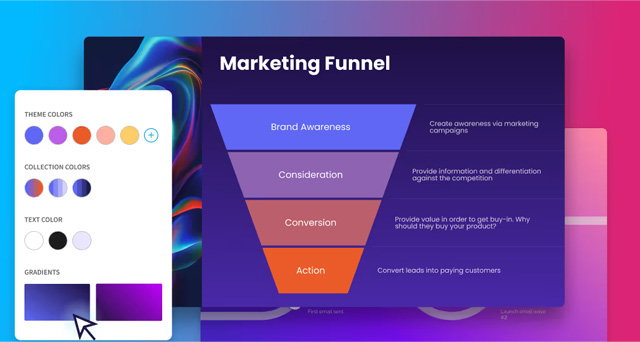

Guide
When most AI work happens in private sessions, every user produces material to their own standard, and 55% now see more low-quality output needing rework. This guide makes the case for shared templates that keep AI-generated work consistent before it circulates.
Download
Accenture finds 82% of employees say AI made them more productive, yet half say it also raised the speed expected of them.

EY finds half of 1,200 CEOs credit AI for their biggest productivity gains, yet only 16% can see AI returns in real time.
