New consumer research finds more than one in four online shoppers openly bend refund rules, and nearly every attempt pays off. With generative AI making fake evidence cheap and peak season weeks away, refund policy is no longer a customer service setting. It is a margin decision.

Key Takeaways
Every operations leader knows the returns line is a cost. Fewer have a clear view of how much of it is honest. New research suggests a meaningful share is not, that the people doing it no longer see it as wrong, and that the tools to fake a convincing claim are now free. The timing matters: the heaviest returns season of the year starts in a few weeks, and most refund policies were written for a customer base that told the truth.
Fraud prevention firm Ravelin surveyed 6,282 consumers who had shopped online in the past six months across the UK, Germany and France. As Retail Technology Innovation Hub reported, 27% openly admit to abusing refund policies, and 98% of attempts to exploit those systems succeed. Chris Owen, policy advisor for finance at the British Retail Consortium, put it plainly: “The growth of refund abuse is putting unnecessary financial drain on retailers.”
The country split shows how normal the behavior has become. In the UK, 37% of consumers say they have engaged in, or plan to engage in, refund abuse, ahead of France at 33% and Germany at 25%. The tactics are mundane rather than sophisticated: claiming a parcel never arrived, returning goods after use, or sending back an empty or dummy box while keeping the product. Merchant Fraud Journal's summary of the findings notes that occasional abusers report an average gain of €/£390 per claim, rising to €/£491 for those who do it more than four times a year.
Two caveats belong next to those numbers. They are self-reported admissions, not losses measured in merchant systems, and they come from a vendor that sells refund abuse protection. But the direction matches what merchants report independently, and the honest majority is paying attention: 75% of shoppers in the same survey agree that refund abusers make online shopping less pleasant or convenient for everyone else. Ravelin CEO Martin Sweeney described the shift directly: “This is no longer a fringe behaviour.”
For years, the friction in a false claim was proof. A photo of damaged goods or a receipt took some effort to fabricate. That barrier is gone. In Ravelin's earlier State of Refunds survey of 6,200 shoppers, 65% of consumers said AI has made it easier to falsely claim refunds for items bought online.
Transaction data points the same way. Signifyd's 2026 State of Fraud analysis found “item not as described” claims in North America rose 49% from January to April 2026 compared with the same period in 2025, a jump it attributes to AI-generated images of damaged goods. In Europe and the UK the same claim type rose 35%, which Signifyd ties to AI-doctored photos. In Latin America, consumer abuse, including false “never arrived” and “not as described” claims, rose 168%. The company also warns that generative tools can now produce receipts that look authentic, complete with store branding.
Merchants feel it. The Merchant Risk Council's 2026 Global eCommerce Payments and Fraud Report, based on 1,278 merchant professionals in 37 countries surveyed in late 2025, found 57% saw an increase in refund and policy abuse over the past year, and 62% reported an increase in first-party misuse disputes. Payment fraud alone already consumes 3.2% of global ecommerce revenue, before abusive refunds are counted.
The instinctive response is to tighten the rules for everyone: shorter windows, restocking fees, photo requirements on every claim. That approach has two costs. It adds friction for the honest majority, and it barely slows the people it targets, because a photo requirement means little when a convincing photo takes seconds to generate. Sweeney's warning is aimed squarely at this reflex: “Blanket rules treat every customer as a risk – and that simply doesn't work anymore.”
The data points to a different design. Abuse concentrates in repeat behavior, and the most valuable claims come from frequent abusers. That makes refunds a risk segmentation problem rather than a policy wording problem. The useful questions are operational: Which customers file claims far above their peers? Which carriers and regions generate disproportionate “never arrived” reports? Which high-value claims are approved automatically with no one looking at the account history behind them?
Answering those questions requires connecting data that usually sits in separate systems: orders, carrier scans, returns intake, customer accounts and contact center notes. Most organizations already hold it. Few have joined it up in a way that lets an agent, or a model, see the pattern before a refund is issued.
Refund generosity was built as a loyalty tool, and for most customers it still is. The companies that protect it will be the ones that can tell their honest customers from their repeat abusers, and that build that capability before the busiest returns season of the year rather than after it.

Report
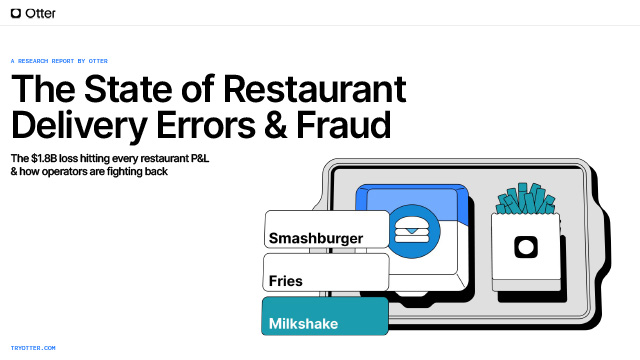
Delivery is where “it never arrived” claims are tested hardest. This research sizes how often errors and fraudulent refund claims occur and how top operators detect and dispute them, the evidence-first approach this article argues every merchant needs.
Download

Guide
Disputed high-value refunds often end on a phone call where an agent has seconds to decide. This guide covers how to make those calls better informed, so judgment rests on the customer's real history rather than a blanket rule.
Download

Research
Spotting a repeat refund abuser means linking orders, carrier scans, returns and customer accounts. Gartner's guide to data quality and governance is the groundwork any AI-driven refund risk model depends on.
Download
Manhattan office supply just hit its lowest level since 2020 and rents are rising, yet employees still come in less often than employers plan for.

Surveys released this month show AI use is nearly universal while value measurement barely exists. The organizations that track outcomes report dramatically better returns.

A study of 800 organisations across six sectors quantifies what poor operational performance actually costs most businesses.
