A Gartner survey of 251 executives finds nearly a quarter of non-IT operating budgets now go to technology, yet only 54 percent of non-technology executives say they have a strong partnership with their IT department.

Key Takeaways
Technology stopped being an IT line item some time ago. Marketing runs its own martech stack, finance owns its planning and close tools, sales operations configures the CRM and service leaders choose their own contact center software. What has not caught up is the relationship between the people now running all that technology and the department that is still expected to answer for it. New Gartner research suggests that gap is now one of the biggest obstacles between enterprises and the AI returns their boards are waiting for.
The scale of the shift is clearest in the numbers. According to CIO Dive's report on the Gartner survey, presented at Gartner's IT Symposium/Xpo, nearly one-quarter of employees who report to functions outside IT, in areas such as marketing, accounting and sales, are tech workers. Nearly one-quarter of those departments' operating budgets is dedicated to technology, and nearly one-third of their time goes to personally managing it.
The survey covered 251 technical and non-technical executives at companies with more than $1 billion in revenue, and it found broad agreement on direction. About four-fifths of CEOs view technology as the enterprise's business strategy, and 82 percent of executives say CIOs should be responsible for guiding enterprise AI initiatives. Most of the C-suite agrees the company is heading toward an AI-powered enterprise. The disagreement is about how to get there.
That disagreement shows up in how executives describe technology's role. More than half of executives in non-tech roles said they view technology as informing the business strategy, but not shaping it. In other words, the leaders who now spend a quarter of their budgets on technology often still think of it as support rather than as the way the business competes.
The weakest number in the research is the relationship itself. Only 54 percent of non-technology executives said they have a strong partnership with their IT departments, and technical executives were less likely to agree that the C-suite is aligned on data strategy. Business units are buying and running more technology than ever, and close to half of their leaders do not describe their working relationship with IT as strong.
Ownership has blurred at the same time. Gartner senior principal analyst Jennifer Carter told the symposium audience that executive teams are less likely to take collective responsibility for the capabilities needed to hit performance goals, including organizational change. Volunteering for the upside is easy, she noted, offering the example of an executive saying "I'll be in the hub for AI revenue generation." Volunteering for workforce management is rarer.
The default is that accountability lands on the CIO, whether or not the job description says so. A separate 8x8 survey of more than 2,500 technology executives found that more than half of global enterprise tech leaders say the CIO is held responsible for AI errors within their organizations, compared with 16 percent of customer service and 6 percent of legal leaders who say they are on the hook when AI fails. The function that owns the outcome is often not the function that chose or configured the tool.
Fragmented ownership was an annoyance when the tools were point solutions. It becomes expensive when AI depends on data that crosses every one of those systems. Dun & Bradstreet's quarterly AI Momentum survey of 10,000 businesses across 32 countries, released October 28, found that only 8 percent describe their enterprise data as fully ready to support AI at scale. Among those that are, 81 percent report broad or strong returns, against 12 percent of businesses whose data is only partially ready.
Data readiness is not something IT can deliver alone when a quarter of the technology spend, and the systems that hold the customer, financial and operational records, sit in other departments. Every function that runs its own stack also runs its own definitions, its own integrations and its own data quality habits. Without a working partnership, the CIO who is expected to guide AI is guiding it across data the CIO does not control.
Risk follows the same pattern. The IAPP Digital Risk Report 2026, published October 28, argues that digital risk can no longer be managed as a standalone compliance function, and that organizations are raising it to executive and board-level planning. "No regulation and no risk related to tech exists in a vacuum," Joe Jones, IAPP's director of research and insights, told CIO Dive, warning that coordination can also slide into what he called death by committee.
Carter's remedies were practical rather than structural: communication and transparency, a technology strategy aligned across departments, proactive communication about technology decisions, and showcasing AI use cases to build buy-in. She also argued that CIOs are better positioned on AI than they were a few years ago and no longer need to prove that technology matters. The work now is making shared ownership real.
A practical playbook for operations leaders:
The C-suite has largely settled the question of whether technology is the strategy. What it has not settled is who owns it. With business units now holding a large share of the technology budget and the CIO still holding most of the accountability, the companies that get more from AI will be the ones that turn that split into a genuine partnership.

Report
When every function runs its own stack, the cost shows up as siloed workflows and slower decisions. ClickUp quantifies that tool sprawl and lays out a framework for consolidating work into one shared system.
Download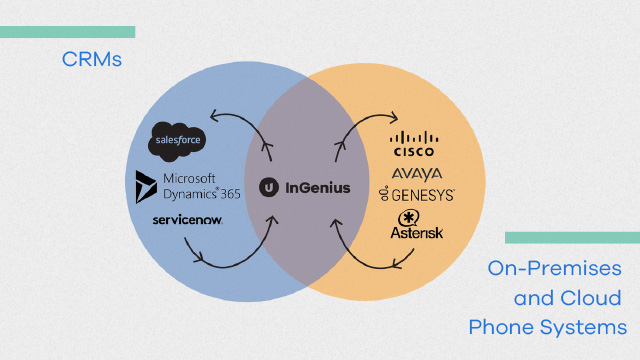

Guide
Service teams often own both the CRM and the contact center platform. Upland shows how connecting the two creates the data foundation AI needs, the kind of cross-system readiness only 8 percent of businesses have today.
Download

Whitepaper
Functions outside IT already spend nearly a third of their time managing technology. Beautiful.ai's research shows how another hidden drain, building and reformatting presentations, compounds quietly across business teams.
Download
Gartner finds 86 percent of CIOs see AI risk growing faster than AI value, by four times on average, while few have the governance to manage AI agents.

New research maps the expanding mandate of today's COO and how the role is changing faster than most boards can keep up with.
